Fast-Track System Design: The Essentials
We have sat on the other side of the table for thousands of interviews at top-tier tech companies (Meta, Amazon, etc.). Through that experience, we’ve distilled the vast world of system design down to the absolute necessities required to pass the interview.
Most resources drown you in academic theory or surface-level summaries. We take a different approach: working backward from the rubric.
This crash course is designed for two types of engineers:
- The Time-Crunch Candidate: You have an interview in a week (or days) and need high-impact knowledge immediately.
- The Practical Learner: You want to understand how components connect in real-world scenarios rather than memorizing textbook definitions.

What is a System Design Interview?
At its core, a system design interview is a simulation of real-world architectural planning. You are given a vague, high-level problem and asked to convert it into a concrete technical specification.
Unlike coding interviews, there is no single "correct" answer.
Your interviewer isn't looking for a specific solution key; they are assessing your ability to:
- Navigate ambiguity.
- Identify and weigh trade-offs.
- Communicate complex ideas clearly.
- Structure a scalable solution.
Note: While entry-level roles rarely face these rounds, they are standard for Mid-Level engineers and arguably the most critical factor in hiring decisions for Senior and Staff positions.
The Two Main Flavors
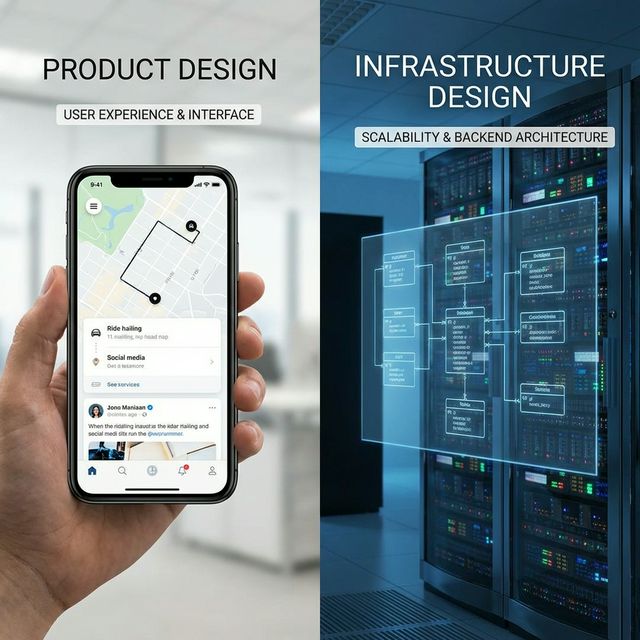
While every company differs slightly, the vast majority of system design questions fall into two buckets:
- Product Design: "Build Instagram," "Design a ride-sharing app like Uber," or "Create a news feed." These focus on user-facing features and data flow.
- Infrastructure Design: "Design a rate limiter," "Build a distributed cache," or "Design a key-value store." These focus on the plumbing and internal tools that support other applications.
(If you are looking for Object-Oriented Design/Low-Level coding or Machine Learning system design, those are separate disciplines not covered in this specific guide.)
How You Are Graded (The Rubric)
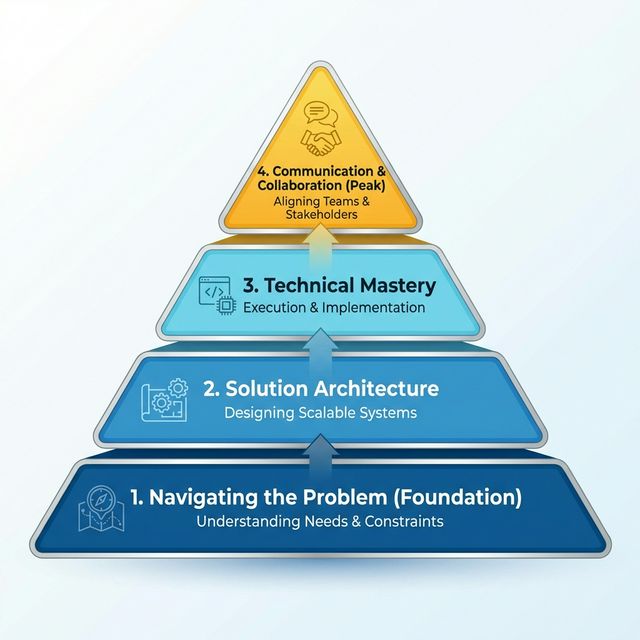
Interviewers generally evaluate you on four specific competencies. Understanding these will help you score points even if you don't know the answer to a specific niche question.
1. Navigating the Problem
This is where most candidates fail immediately. Do not jump straight to drawing boxes. The interviewer wants to see you break down a complex, under-specified request into manageable goals.
- The Trap: Solving the wrong problem or obsessing over trivial details.
- The Goal: Ask clarifying questions, define the scope, and agree on the MVP (Minimum Viable Product) requirements before designing.
2. Solution Architecture
Once the scope is defined, can you build it? This tests your knowledge of Core Concepts. You need to demonstrate how different components (Load Balancers, Databases, Caches) fit together to form a cohesive system.
- The Trap: "Spaghetti diagrams" where data flow is confusing or circular.
- The Goal: A clean, logical architecture that addresses the functional requirements.
3. Technical Mastery
This measures your familiarity with modern technology and patterns. Can you apply the right tool for the job?
- The Trap: Using outdated technology (e.g., sticking to patterns from 2015) or treating a specific tool (like Redis or Kafka) as a "magic box" without understanding its limitations.
- The Goal: Justifying your technology choices with data and reasoning (e.g., "I'm choosing a NoSQL database here because we need high write throughput...").
4. Communication & Collaboration
Finally, would I want to work with you? This is a collaborative exercise.
- The Trap: Being defensive when challenged, or going silent for long periods while thinking.
- The Goal: Treat the interviewer as a peer. Drive the conversation, but be receptive to their hints and feedback.
How to Use This Guide
If you are in a rush, efficiency is key. We have structured this content to maximize your ROI (Return on Investment) per hour of study.
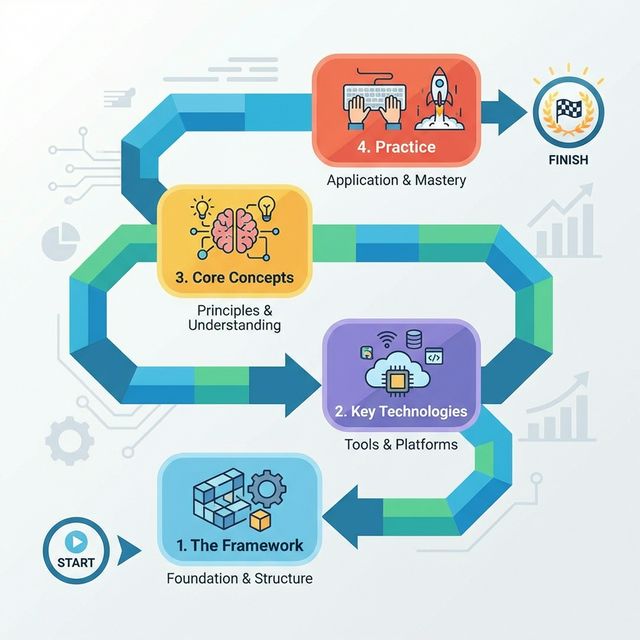
The Recommended Path
- The Framework: Start with the Delivery Framework. This gives you a mental template to organize any interview answer so you never freeze up.
- The Building Blocks: Skim the Key Technologies. You don't need to be an expert in everything, but you need to know what tools are in your toolbox (e.g., when to use Cassandra vs. Postgres).
- The Glue: Study the Core Concepts (Sharding, Caching, CAP Theorem). These are the principles that let you scale your design.
- Practice: Passive reading isn't enough. Use our practice questions to test your ability to apply these concepts.
A Note on Staff+ Engineers
If you are interviewing for Staff or Principal roles, the bar is different. You aren't just expected to "solve" the problem; you are expected to identify the hard parts of the problem and lead a deep exploration of trade-offs. The rubric shifts heavily toward "Problem Navigation" and "Technical Depth."
Conclusion
System design is a skill, and like any skill, it can be learned. Don't be intimidated by the ambiguity. Stick to the framework, communicate your thought process, and focus on the fundamentals.
Ready to start? Let's look at How to Prepare.